



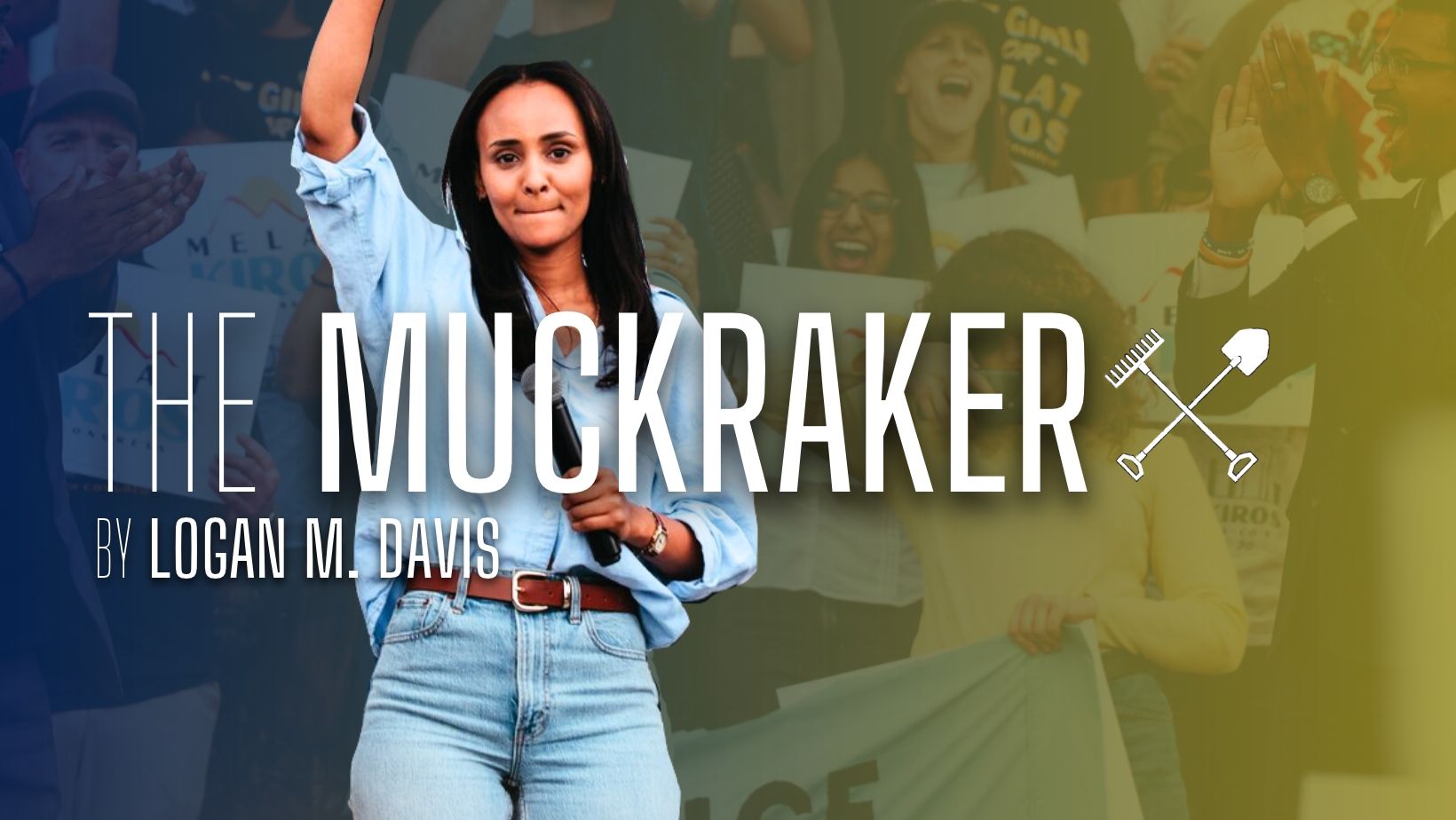
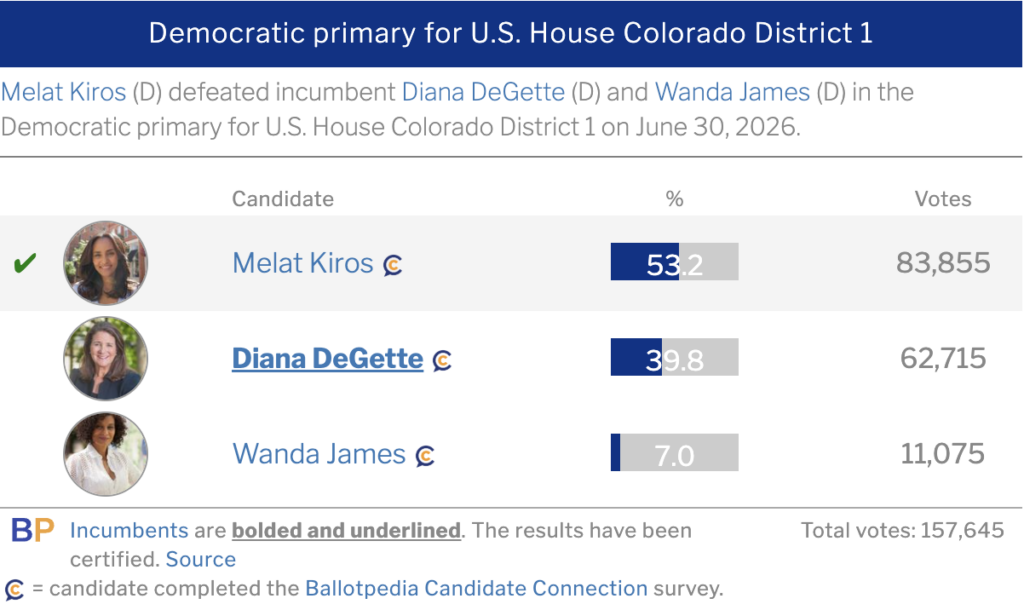
Last night, Denver voters brought home an electoral upset first put in motion more than four months ago. In the June 30 primary election for Colorado’s overwhelmingly Democratic 1st Congressional District, democratic socialist newcomer Melat Kiros defeated 30-year-incumbent Congresswoman Diana DeGette by double digits. Last night, as general election ballots were tallied, the voters of Denver made official what was already a fait accompli: Kiros will represent Denver in Congress.
What Kiros and her team accomplished will make headlines around the country — maybe around the world — but how they did it will receive much less attention. Having spent well over a decade on the campaign trail, the how intrigues me. After Kiros’s shocking primary upset, I started looking for answers. That quest for answers is how I ended up writing a piece in July about the trio of consultants from the MAC Group who helped mastermind Kiros’ big win in June. Even during that conversation, though, everyone kept telling me the same name; telling me that, if I really wanted to understand the lifeblood of the campaign, I needed to talk to Rebecca Oliver.
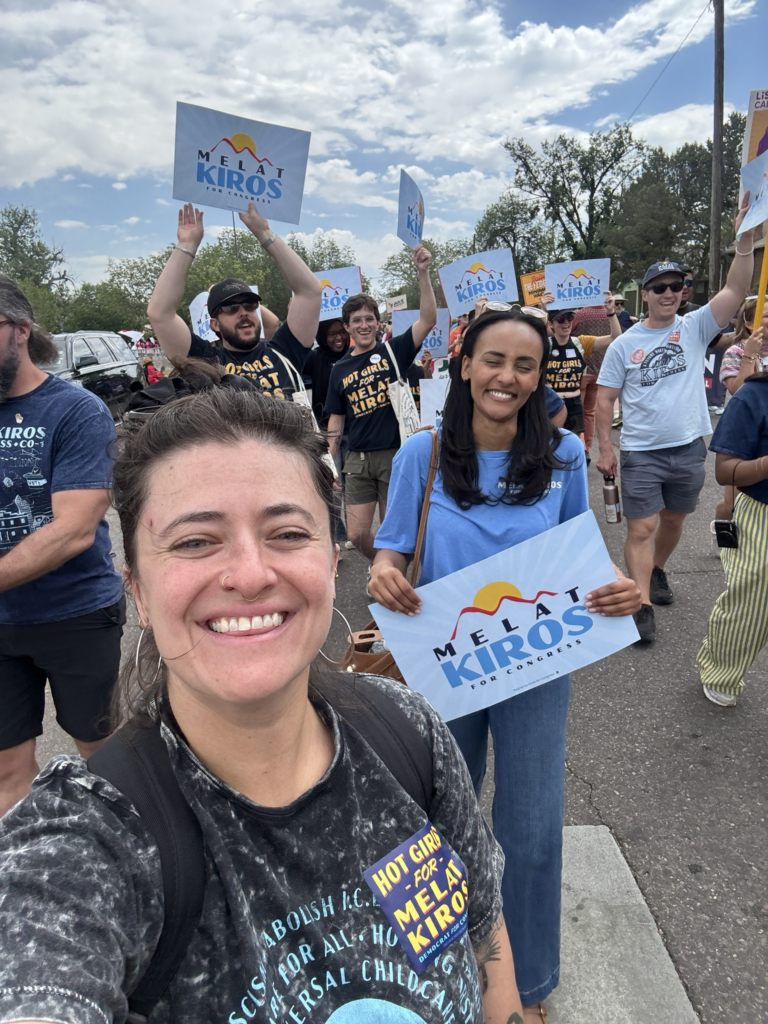
Oliver was the organizing director for the primary campaign, and has served as Kiros’ campaign manager during the general election. And while Tuesday’s victory will be a feather in her cap, the truly jaw-dropping feat was what Oliver pulled off this summer in her role as organizing director: More than 7,000 volunteers enlisted. More than 500,000 calls to voters. More than 116,000 doors knocked.
In September, I finally had a chance to ask her how she did it. First, though, I had to ask her how she ended up in a position to do it.
“I was organizing with a bunch of Jewish-led social movements, partially around Israel-Palestine stuff,” Oliver told me as we sat outside of Bardo Coffee House on south Broadway. Before Kiros’ campaign, Oliver worked for If Not Now, which describes itself as “a movement of U.S. Jews organizing our community to end U.S. support for Israel’s apartheid system and demand equality, justice, and a thriving future for all Palestinians and Israelis.” In the past, Oliver had also helped start a Jewish-led social movement, Never Again Action, focused on justice for immigrants in the United States.
Despite a wealth of organizing experience, Oliver had never worked on an electoral campaign. Then Kiros came along. Already thinking about a job change, Oliver was scrolling Instagram when she saw Kiros’ campaign launch video in 2025. It made an impression. By January, she was working for the campaign.
“I was the first full-time hire for the campaign itself,” she told me. From the beginning, she could tell there was a lot of energy surrounding the campaign. “Casey from the MAC Group had already built up a pretty solid media team. There was a Discord that had maybe 150 or 200 people in it. And there were like five people who had signed up to help petition onto the ballot.”
“So there was a lot of energy,” she said, “but there wasn’t a lot of infrastructure when I started, which was the task.”
There are two ways to get onto the Democratic Party primary ballot in Colorado: you can gather enough petition signatures to qualify, or you can win enough votes at the party assembly to qualify. Initially, the Kiros campaign focused on petitions. In doing so, they also grew their organizing infrastructure. Those first five volunteer petition circulators turned into a team of 65 volunteer petition circulators. “That ended up being the basis of our field leads program,” later on, Oliver told me.
As the campaign grew, and started working with partner organizations like the Democratic Socialists of America (DSA) and the Sunrise Movement, Oliver began to see the through-line between her years of work as a movement organizer and this new job on a political campaign.
“That was one of the coolest things for me in this first electoral experience,” Oliver told me. “I was like, wow, electoral campaigns are an incredible tool for coalition building, for alignment building, for infrastructure building.”
Kiros agreed. “From the beginning, she said this is not about me, right?” Oliver said of Kiros. “This is about something much bigger and longer term. It’s about building power on the left. Building power for people to actually move us closer to what we deserve, right?”
While petitioning onto the ballot, Kiros received DSA’s endorsement – and, with it, some advice. “They were like, we really think you should do the assembly,” Oliver told me. “And so they started activating a lot of their membership base to help with phone banking and turnout for the caucus and assembly process, and that was happening simultaneously with the petition circulating, because we weren’t sure exactly which one we were going with.”
Pursuing both ballot access tracks at the same time was a big lift, but it had upsides. “Those two things happening simultaneously just developed a lot of ownership and leadership” for the existing base of volunteers.
And then the day of the assembly came, and everything changed.
“We went into the assembly with a few hundred people – maybe a little bit more – who we knew we could count on to vote for Melat,” Oliver told me. “But way, way, way more people than that actually voted in the straw poll. People who we did not know, who the campaign had never had a touch point with. It had grown so far beyond us.”
“That is the moment when I felt like, we can do this,” she told me. “But then I was in the room when everybody stood up and cheered for Melat! And I was like – oh, we’re going to do it.”
Kiros’ assembly win over incumbent DeGette was so large that DeGette was almost knocked off the ballot. Local outlets ran headlines with verbs like “trounce” and “wallop,” and one prominent Democratic attorney even called for the abolition of the caucus and assembly process on the basis of Kiros’ victory.
After the win at assembly, the campaign started growing – fast.
“I was building out other teams to help the internal infrastructure,” Oliver told me. “We built a web and data team who ended up running and updating the website, who helped with our backend organizing of volunteers and building out how we were keeping track of people, building out events,” and everything else that comes with a booming campaign.
“We had a goal of knocking 100,000 doors and didn’t really know if we were going to do it, but we were building the infrastructure that would allow us to scale, to have all those people come in.”
By that point, the campaign was experiencing a kind of enviable synergy which the MAC Group consultants also described to me in July. “The field program was generating momentum that translates into organic socials, which then translates into earned media, which translates into credibility, right?” Oliver told me. “And then it funnels back into field.”
As the campaign gained momentum, it also gained detractors. Before her campaign for Congress, Kiros, was fired from her job as an attorney for a blog post she wrote about Israel’s actions in Gaza in retaliation for the Hamas-led attacks of October 7, 2023. Despite the second paragraph of that blog post being a full-throated and unequivocal condemnation of antisemitism, Kiros had been dogged throughout the campaign by naysayers who claimed that her opposition to Israel’s actions meant that she hated Jewish people. By June, in the lead-up to a Kiros rally set to feature fellow democratic socialist candidates Donovan McKinney of Michigan and Justin Pearson of Tennessee, along with prominent leftist streamer Hasan Piker, those attacks reached a fever pitch.
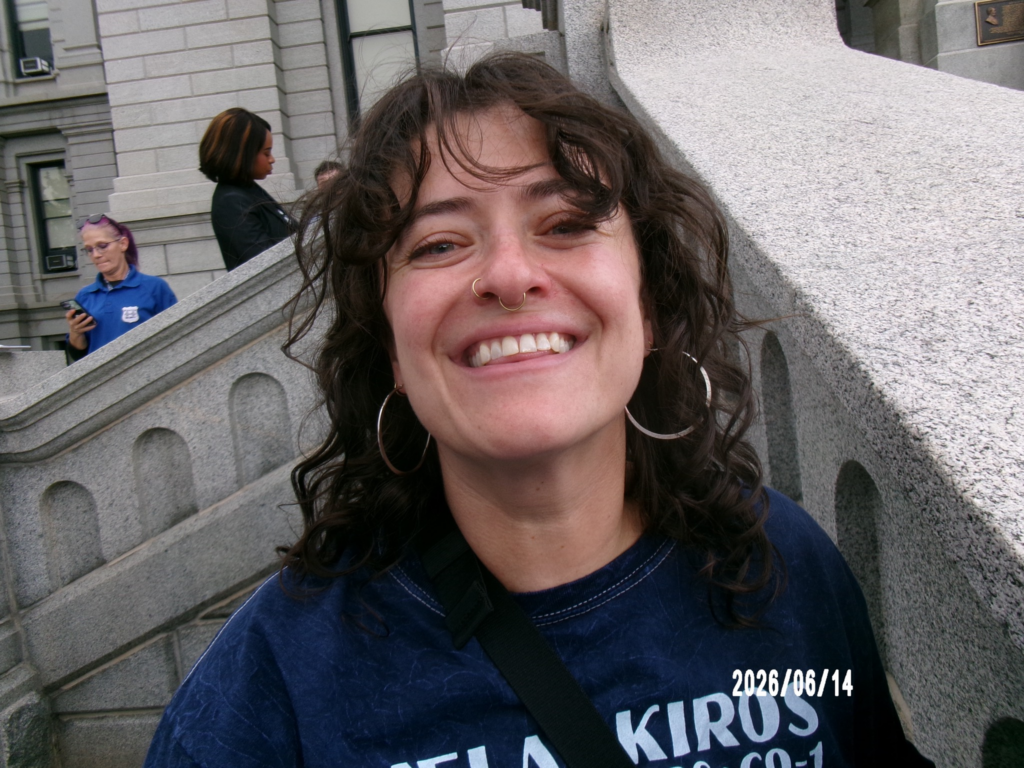
Ads from an outside super PAC supporting DeGette, and ads from DeGette’s own campaign, started attacking Kiros as antisemitic, and for her association with Piker. A number of venues canceled on the scheduled rally, which ended up being held at the state Capitol building.
“There were three million dollars being spent against us and these attack ads were everywhere,” Oliver said.
“As a Jewish person, the community is very divided, actually,” she told me, talking about Israel and Palestine. “A lot of these narratives that say the Jewish community is afraid, the Jewish community is scared of Melat and thinks she’s antisemitic, all these things. I’m like, which Jewish community? Who are you talking about? We’re not a monolith.”
“The way antisemitism historically functions is as a wedge between Jewish people and other marginalized people,” Oliver said. “People are saying that the way [Kiros] is talking about this is divisive, but then they put out headlines saying that she’s rationalizing killing Jews. Is that not further entrenching any division that’s happening here, rather than trying to build power with people who are actually in deep alignment with a lot of the things that Denverites want?”
As far as Oliver is concerned, Kiros harbors no antisemitism. “As soon as you meet Melat, it’s like, no way,” she told me, laughing.
Denver voters and television viewers did not seem to lend any more credence to the ads than the Kiros team did: as they ran, the campaign’s volunteer base grew. Personally, I remember wondering why a PAC supporting DeGette would spend so much money to put Kiros’ name on television, while rarely mentioning DeGette herself.
DSA was also a help as things ramped up, funneling volunteers and capacity to the campaign. “There were also DSA-led canvasses,” Oliver told me, along with canvasses led by the Sunrise Movement and others. “And then inside DSA, I know there was a whole operational working group of people that were doing the phone banking of their members to turn them out.”
By Election Day, the campaign’s volunteer database had more than 7,000 names in it. “I think there are probably like 5,000 people in there who were probably converted into some type of action, is my guess,” Oliver told me. Meaning around 5,000 people actually filled some sort of volunteer shift. Anyone who has ever worked a campaign will understand how large that number is. They more than met the goal of knocking 100,000 doors, and added half a million phone calls to the tally. Yard signs proliferated throughout Denver.
That night, Kiros made history. When New York’s Alexandria Ocasio-Cortez defeated incumbent Joe Crowley by 13.4% in a surprise upset in 2018, the gap between them was 4,000 votes. When Colorado’s Melat Kiros defeated incumbent Diana DeGette by 13.4% in June, the gap between them was more than 21,000 votes. More comparisons between the two are sure to be made.
“There is no version of this campaign without Rebecca,” Kiros told me for this piece. “She built our program from the ground up on a foundation of grit, genuine trust with our community, and a philosophy of meeting voters where they’re at, not waiting for voters to come to us. She recruited and led a volunteer army that outworked everyone, shattered records, and showed up for voters in every corner of this district.”
Like Kiros, Oliver is just getting started. “I feel very committed to the project of building long-term progressive people power,” she told me. “ And I think that I’ve had a really unique and special opportunity to get to do that in a lot of different areas.”
“So, for me, whether it’s supporting Melat in office in whatever role, or helping build the bench here or other places, I’ll come into that, but I don’t know exactly what it looks like yet.”
Amid those unknowns, there is one thing Rebecca Oliver is certain about.
“It wasn’t a fluke,” she told me. “They said, oh it’s only possible on the coasts, it’s only possible in New York, right? No, it’s possible in Denver. It’s possible in Michigan. It’s possible in rural California. It’s possible in Tennessee.”
“It’s not a fluke, and it’s not about a perfect candidate. It’s about the people behind it and about the alignment that is building, coming out of the conditions everyone is living in right now. The only way to change the conditions we’re living in is to take agency over our own lives in the small ways we can.”
