


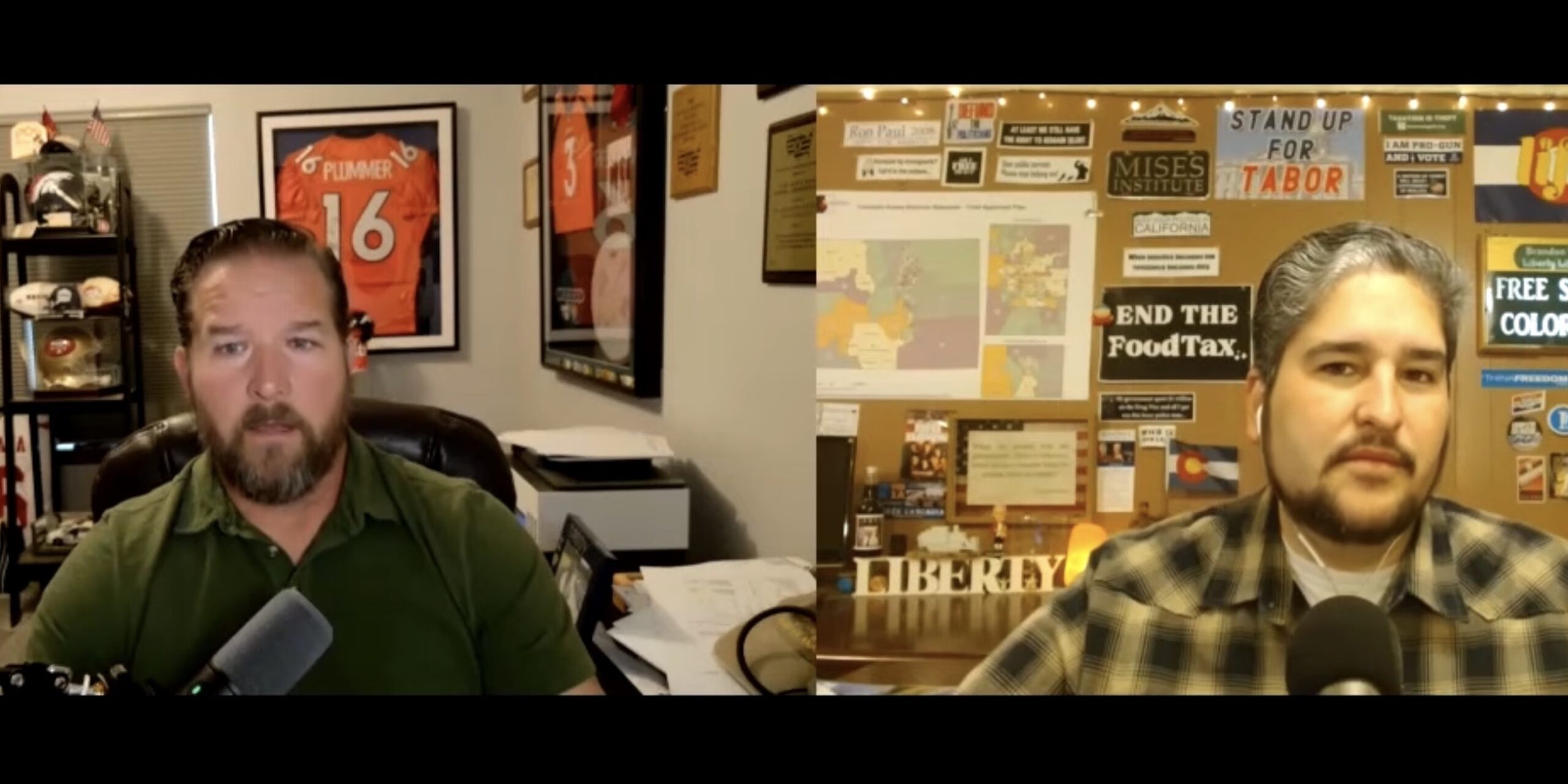
A former Pueblo Sheriff’s deputy running for the state legislature said last week that reinstating qualified immunity, a legal protection from civil lawsuits for law enforcement officers, would be one of his top legislative priorities. However, in an Oct. 20 interview on the conservative podcast Free State Colorado, state House candidate Jonathan Post left out significant context for his interest in the issue.
Seventeen years ago, an appellate judge relied upon qualified immunity (QI) to dismiss a civil suit against Post, brought by the family of Willis Green, whom Post killed when he crashed into Green’s car while driving without emergency lights or sirens during a high-speed pursuit of a different vehicle.
After being charged criminally by the Pueblo District Attorney, Post pled guilty to careless driving resulting in death. The misdemeanor charge did not result in Post’s dismissal, but a loss in the civil suit could have resulted in him losing his law enforcement certification. The Green family initially won the lawsuit before it was overturned on appeal, with the judge citing federal qualified immunity protection. Colorado’s repeal of state-level qualified immunity, which still exists in most states, does not affect the similar federal law.
Colorado legislators ended state-level qualified immunity in 2020 with overwhelming bipartisan votes in both chambers (32-2 in the Senate). Among those voting for the bill were former Weld Sheriff John Cooke, who also served as president of the Colorado Sheriffs Association.
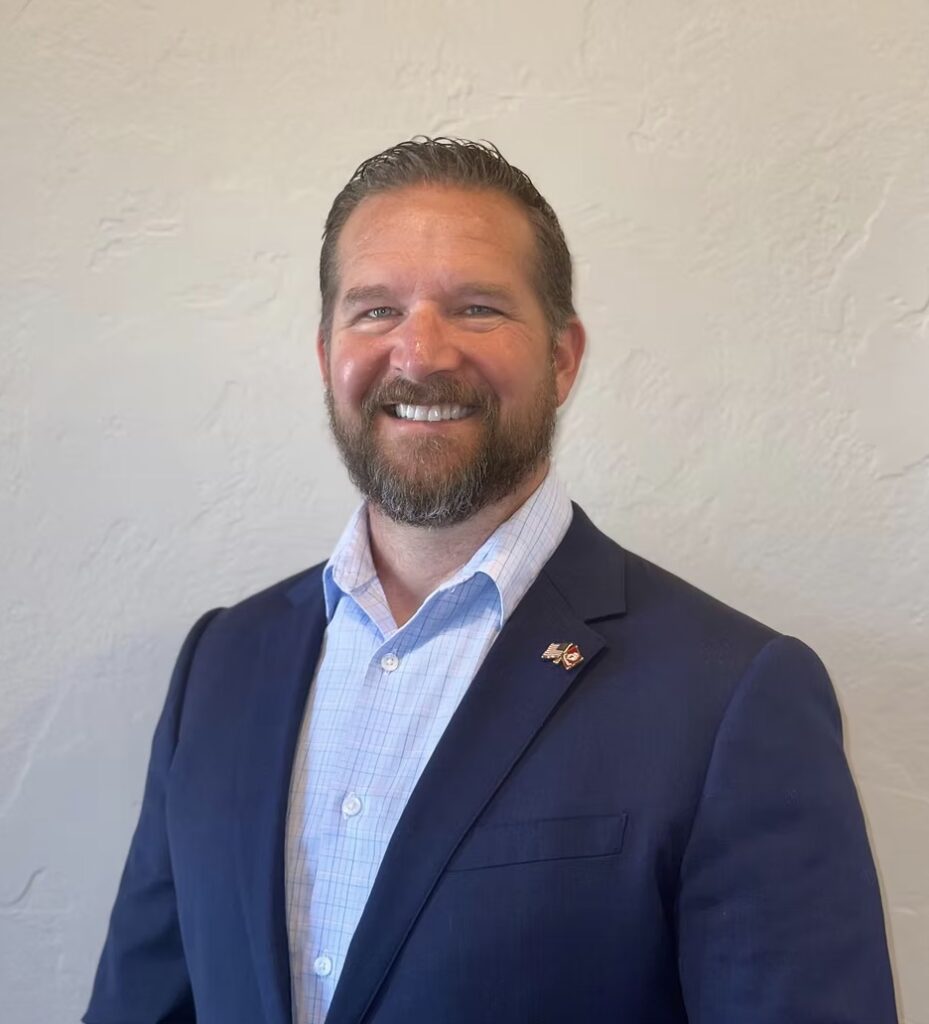
Reached for comment, Post clarified that while reinstating qualified immunity is one of his top legislative priorities, his personal accident was not the reason he decided to run for office.
“My decision was driven by broader concerns about the direction of Colorado, particularly public safety, government accountability, affordability, and the impact of legislation on the people who serve our communities,” said Post via email to the Colorado Times Recorder. “However, my personal experience certainly gives me a unique perspective on qualified immunity and why I believe we need a more nuanced discussion about it.”
Post notes the difference between federal QI law, “a judicial doctrine that can protect government officials from personal civil liability when their conduct does not violate clearly established federal law,” and current state law, since the passage of the 2020 Enhance Law Enforcement Integrity Act, which he says, “created a separate avenue for civil rights claims under state law and specifically eliminated qualified immunity as a defense to those claims.”
“My concern is that we must distinguish between officers who are performing their lawful duties in good faith, sometimes making split-second decisions under difficult circumstances, and officers who knowingly abuse their authority or violate someone’s constitutional rights,” wrote Post. “There is a fundamental difference between making a mistake while performing your duties and intentionally victimizing someone through an abuse of authority.”
Asked whether he views his own accident as a mistake while on duty, Post says he does.
“More than 20 years ago, I was involved in a tragic traffic accident that resulted in Mr. Green losing his life. It is something I have never taken lightly,” says Post. “At the time, I was acting within the scope of my duties as a police officer. I was traveling approximately five miles per hour above the posted speed limit when Mr. Green turned in front of my vehicle. Mr. Green was not wearing a seatbelt, which I believe is an important fact that has received relatively little attention.
“I have never claimed there was no responsibility on my part. I believe there were multiple contributing factors, and I ultimately accepted responsibility by pleading guilty to careless driving,” says Post. “The subsequent federal civil litigation involved qualified immunity, and that experience demonstrated to me the importance of understanding the circumstances surrounding an officer’s actions rather than treating every adverse outcome as evidence of intentional misconduct.
“My accident was a tragedy, and a life was lost. Nothing changes that, and I would never minimize the impact on Mr. Green’s family. But I also believe our justice system must consider intent, circumstances, individual conduct, and the degree of culpability when determining appropriate consequences.
“There is a meaningful difference between negligence resulting in a tragic accident and someone who deliberately chooses to assault, rob, or otherwise victimize another person. That distinction does not excuse negligence or eliminate accountability. It recognizes that different actions and circumstances warrant different legal responses. My experience has reinforced my belief that justice requires both accountability and fairness. We should be able to hold people responsible for their actions without abandoning the principle that circumstances matter.”
In his comments to the Colorado Times Recorder, Post identified other current laws and public safety policies that he believes warrant review for their potential to overly restrict law enforcement. These include aspects of the 2020 Enhance Law Enforcement Integrity Act, body camera requirements (which he says he generally supports but worries might be unfair to officers whose cameras malfunction), and the recently passed SB 26-190, which places restrictions on certain public statements by officers involved in investigating fatal use-of-force incidents when those statements could materially prejudice legal proceedings.
Read Post’s comments on qualified immunity below to Brandon Wark in his Free State Colorado interview below:
“Qualified immunity- this is another thing for law enforcement officers. That was one thing that they took away in 2021 where now law enforcement officers- they’re having trouble recruiting people because they don’t want the responsibility. As a cop, when I first took the job, I knew that there was risks involved the job. I was okay with that. Qualified immunity basically says, “Okay, you are okay with the risk. Now, we’re going to put some of the risk on your family. So, you can also be hurt, killed, whatever it is, but we’re also going to go after your family for money on top of that.” And also if a lawsuit is successful — not whether it’s successful as in a settlement, whether it’s successful as it goes to trial– you lose your POST certification, which that also means you lose your career. So they’ve really attacked it on on all fronts. And when we talk about, you know, qualified immunity overall, there already is a qualified immunity statute in federal law, title 86. What that specifically says is that if an officer is acting within the color of his authority, within his duty, he retains the right for qualified immunity. What that does is that protects an officer from making a mistake, which we’re human. We do make mistakes.
What the Colorado bill did is that took away that and it made it easier to sue when you do make a mistake. So, I agree that if somebody is acting outside of the color of their authority and victimizes somebody that doesn’t need to be- that shouldn’t be victimized, I’m okay with that officer losing qualified immunity. I don’t believe in a blanket coverage. But what I do think that personally, an officer should not be held accountable if they’re acting within –I mean I not necessarily accountable, but their bank account be accountable for a mistake that happened in the line of duty when they were trying to do the right thing. And I think that’s the distinction- an officer that’s doing the right thing should have some type of protection. So, that would be another bill that I would want to repeal because we have it covered within federal statute, federal law.
The next thing is that if they don’t agree that qualified immunity should be for law enforcement officers, then why do judges, politicians get to reap the same benefits when they get hours, months, weeks to actually draw up and think about these pieces of legislation or decisions in the courtroom, when officers do not get that luxury? Officers have to make split-second decisions all the time. Politicians, judges- they don’t. They have plenty of time to think about the consequences that could happen. So I would even do it for myself. I’ve lived without qualified immunity. I’m okay with that. If I have to make a decision that victimizes somebody else, that’s on me. So, as a politician, I am good with, hey, if it’s not good for the officer on the street that has to deal with split-second decisions, a judge, a legislator should not have the same benefit.”
