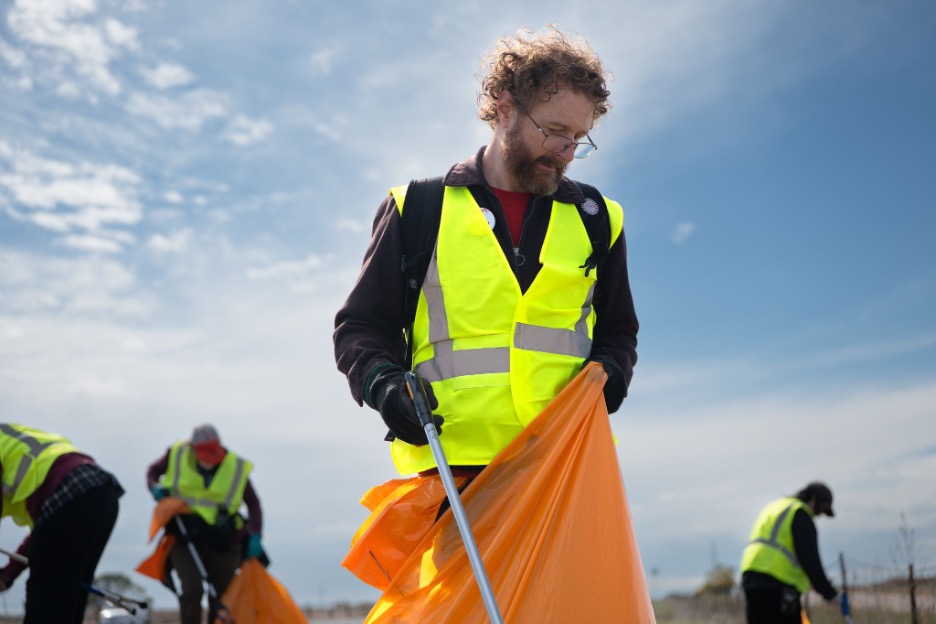
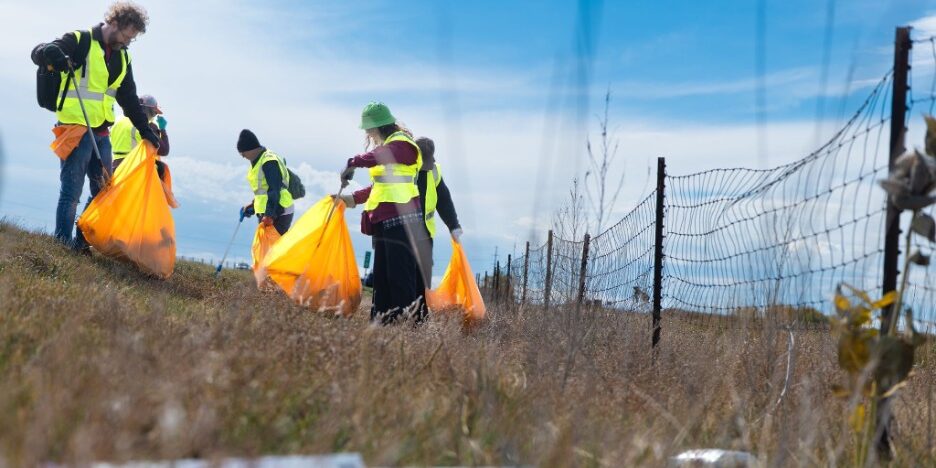
Members of a coalition opposed to a new immigration detention center in the town of Hudson organized a highway cleanup over the weekend to demonstrate their commitment to the rural community. Hudson, located roughly 30 miles northeast of Denver, has been the site of protests for over a year after a 2025 report from the American Civil Liberties Union revealed that the Weld County community was being considered for an ICE facility.
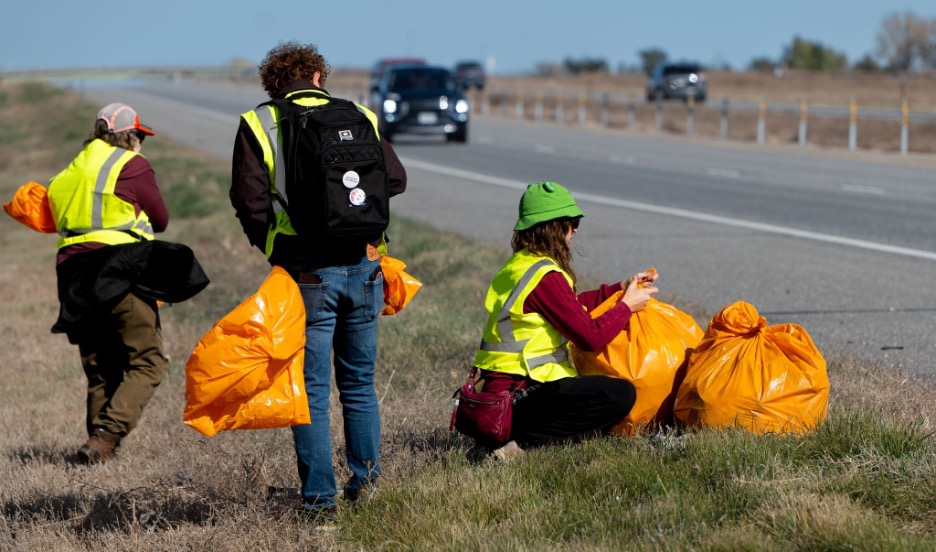
No Concentration Camps in Colorado, the main organizing group behind the cleanup, has demonstrated at Hudson Town Council meetings, but has expanded its activism to include mutual aid services and other methods of community engagement.
One of the key organizers for the event, Jeff Akkerman, a resident of Fort Collins, told the Colorado Times Recorder that he was relatively new to activism and became involved after the 2024 election. Akkerman said he was particularly appalled by remarks President Donald Trump made about the legality of protesting, and began organizing a year ago as a result.
“When Donald Trump first said that student protesting was illegal, that drove me out to my first protest that evening. I had never been in a protest my life [before],” Akkerman said. “I started helping out with Hudson about a year ago. I heard [the federal government] wanted to open up another one of these concentration camps here and that I could come to the town council to speak during public comment and try and convince them to do something to stop it.”
“We’ve been pleading with the Hudson Town Council for over a year now to not allow this facility to open,” Akkerman said. “It’s not zoned correctly. They passed an exemption when this prison facility was opened years ago, and it was hosting convicted criminals from Alaska that would be flown down here.”
Akkerman added that the exemption stated that if the facility changed, that exception would need to be approved again.
Akkerman characterized the current state of ICE detainments as fundamentally different from the way the complex operated in the past.
“Putting people who are not convicted of anything into these inhumane facilities is clearly a different use, but [the Council’s] choosing to allow this to go forward,” Akkerman said.
Akkerman recalled that the idea to “adopt a highway” was first floated by other members in one of their group chats and that he immediately liked the idea.
“We are going to invest in this community,” Akkerman said. “We’re going to clean it up, and we’re going to put a sign up that people will drive past every day: No Concentration Camps in Colorado.”
Another motivating factor for Akkerman was reminding the Hudson’s mayor of the opposition to the facility and that it “sparked joy in his heart” that “every time Mayor Joe [Hammock], who works at a prison in Denver, drives to his job, he’s going to drive past our sign.”
CTR reached out to Hudson Mayor Joe Hammock for comment, but has not yet received a response. Additionally, CTR reached out to one of the members of Hudson town council, Candace Nolf, who is running against Hammock in the election. She also did not return CTR’s request for comment.
Akkerman did say he wants people in Hudson to know that organizers were not trying to “micromanage” their town.
“I wouldn’t want somebody coming into my hy home and telling me how to run it, and if I were in a small town, I wouldn’t want somebody in a big city coming and telling me how to run it,” Akkerman said. “We’re not trying to micromanage how they run their town. It’s a human right not to throw people into an inhumane prison without any due process, no charges brought.”
Akkerman pointed to data showing that 70% of people detained by ICE have no criminal charges. Transactional Records Access Clearinghouse, a data research organization at Syracuse University, found that 70.6% of those held in ICE detention have no criminal conviction and, of those who do, many of those are only minor offenses such as traffic or immigration charges, based on data obtained from FOIA requests as of July 11, 2026.
Akkerman said that federal immigration policy extends beyond Hudson.
“This is where the facility is located, but they’re going to be bringing [detainees] in from all over the area,” Akkerman continued. “They’re probably even flying them in from out of the state because once they abduct them, they ship them off to wherever so that they aren’t in contact with their family.”
Akkerman called the process an “illegal, cruel, inhumane scheme.”
“People can say, ‘This is Hudson, keep out, mind your business.’ But they’re going to be abducting my neighbors, my co-workers, my family, my friends. So yes, this does impact me,” Akkerman concluded.
This weekend’s clean-up attracted around 20 people who cleared litter along two stretches of highway around Hudson. Both sections were 2 miles long and, considering that the volunteers worked on both sides of the highway, attendees picked up debris and trash along a total of eight miles.
The Colorado Department of Transportation’s Adopt-a-Highway program allows for volunteers to clear litter along highways. CDOT provides safety training videos, safety vests, and litter bags to groups who sign up to volunteer. The department puts up a sign crediting volunteer groups who adopt highway sections.
Akkerman and other volunteers said they hoped that their efforts would show they care about the community and continue to bring awareness to the situation in Hudson.
Allison Chilton, who also organizes with Notes of Dissent, told CTR that she wants to make sure the community sees they are there to support them.
“We care about the communities here in Colorado. We want to make Colorado a good place to live for everybody,” Chilton said. “Sometimes making Colorado a good place to live for everybody means picking up trash, and sometimes it means fighting against injustice that’s happening in our state.”
Chilton said that she and many others in her group see organizing as “multifaceted.”
“All these issues are intersectional. So fighting for immigrant rights is the same as fighting for LGBTQ rights, is the same as fighting for good environmental causes like no debris on the side of the highway,” says Chilton. “We care about making our state, our country, and our world a good place to live for future generations to come.”
Organizers said they still plan to show up at Council meetings to make their voices heard, but that they will continue to find ways to give back to Hudson, possibly via support for local food pantries and meal services.