


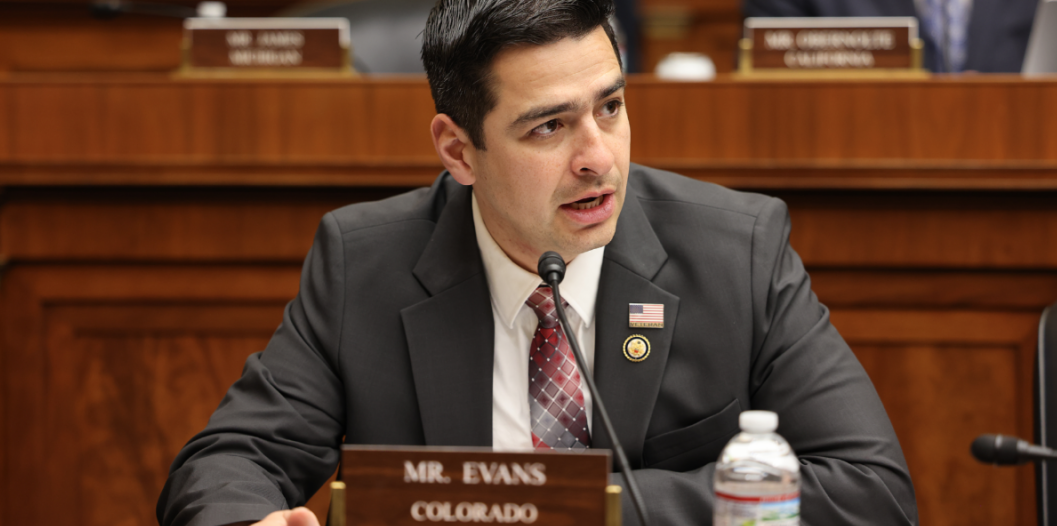
Last July, Rep. Gabe Evans (R-CO) voted for the One Big Beautiful Bill Act (OBBBA), which delivered one of the biggest tax cuts for the top 1% of earners in U.S. history, while making the biggest Medicaid cut in the program’s history.

And yet, Evans says he hasn’t voted to cut Medicaid.
That’s false. He did. What he leaves out is that the changes he voted to impose on Coloradans haven’t fully gone into effect yet. Starting Jan. 1, 2027, there will be new barriers for more than a million Coloradans who rely on Medicaid to see a doctor, fill a prescription, manage a chronic illness, or get lifesaving care.
Supporters of the OBBBA argued that stricter rules for public benefit programs like Medicaid would save taxpayers money, framing the new law’s new work requirements and eligibility restrictions as a way to reduce government spending.
But who actually benefited? The tradeoff is stark. The Institute on Taxation and Economic Policy found that in the first year alone, the bottom 20% of earners received about $70 in tax cuts, while the top 1% received about $70,000, a benefit 1,000 times larger.
That approach marks a significant shift from the commitment the country made more than 60 years ago to expand access to health care for people who otherwise might not be able to afford it.
Medicaid was created and signed into law in 1965 as a federal-state partnership to help people with low incomes access health care. Today, it also covers millions of children, pregnant people, older adults, and people with disabilities. KFF, a national health policy research organization formerly called the Kaiser Family Foundation, found that three-quarters of Colorado adults enrolled in Medicaid are working, including 46% who work full time and 29% who work part time.
Sixty years later, Evans added his name to the list of lawmakers who voted to make Medicaid harder to access.
Medicaid cuts will hit rural Colorado especially hard, where accessing affordable health care is already a struggle. In Colorado, 21% of hospital payments are made through Medicaid. An analysis from the Center for Healthcare Quality and Payment Reform found that nearly a quarter of Colorado’s 43 rural hospitals are at risk of closing. The stakes are especially high in rural communities, where 35% of residents are covered by Medicaid or CHP+, which provides public health coverage for children and pregnant people.
These cuts don’t just affect people enrolled in Medicaid. The Colorado Department of Health Care Policy and Financing estimates a number of downstream consequences, including nearly $60 million in unfunded administrative costs to implement new work requirements; an additional 3,700 caseworkers, nearly double the number currently doing this work; increased unpaid claims for health care providers; more uninsured Coloradans; reduced state revenue to cover the cost of uninsured care; health care facility and hospital closures, especially in rural areas; and potential layoffs across Colorado’s health care workforce. And because Colorado can’t simply hire thousands of additional workers overnight, those administrative demands could mean more pressure on already overextended public servants, eligible people losing coverage, and longer waits for care and support.
So who actually benefits from these cuts? It certainly isn’t Colorado’s budget. Tax changes flowing through to the state left Colorado with a roughly $1 billion budget shortfall in 2025, with additional hits projected over the next decade. And it isn’t delivering a stronger economy for working families. Legislative Council staff’s September forecast pointed to rising long-term unemployment, high loan delinquency rates, inflation, and low savings rates as signs of economic strain. Colorado families already feel that pressure every time they pay for groceries, fill up their gas tank, or get a medical bill.
Election season is here, and with it comes an opportunity to look closely at the choices our elected officials, like Evans, have made and what those choices have meant for Coloradans already stretched thin by the cost of living. It is also an opportunity to make different choices about what comes next.
I hope new leadership recognizes the six decades of Medicaid and Medicare as transformational and understands that being a fiscal champion means investing in the programs people rely on, not making them harder to access.
Coloradans will also have a chance this election to pass Amendment 87, which could generate up to $2.7 billion annually for health care, education, and child care while changing Colorado’s tax system. Amendment 87 would create a graduated income tax that cuts taxes for about 97% of Coloradans while asking higher-income earners to pay more. Amendment 87 is one state-level solution, but Colorado also needs fiscal champions in Congress who will protect programs like Medicaid and make tax and budget decisions that work for working families.
